Charles W. Moore
Occasional thoughts and deeds of an Engineer



Hi friends, family & interested people!
This is our vehicle to keep you all informed of our comings and goings - within limits fitting our decorum of course. Have a good time reading our diary.
We also have sailing blogs at Water-Man-Water and Water Water Everywhere
-
Our World Today: The real Fake News
Posted on July 24th, 2022 No comments

-
This group needs to be reigned in
Posted on July 20th, 2022 No commentsPlease read the book : Zero Fail by Carol Leonnig:

The U.S. Secret Service was described as an agency in crisis on Thursday after reports that the agency deleted text messages from Jan. 6 and the day before.
MSNBC’s Lawrence O’Donnell reported, “the breaking news of the night, the news is that the secret service has destroyed evidence that is essential to the investigation of the Jan. 6 attack on the Capitol.”
“Let me repeat that,” he continued. “Yes, the Secret Service has deliberately destroyed evidence involving the Jan. 6 attack on the Capitol. That was revealed by the inspector general of the Department of Homeland Security, which has jurisdiction over the Secret Service.”
“The most important Secret Service text messages since the invention of text messaging, they were deliberately erased by the Secret Service, according to the inspector general,” O’Donnell said.
I you read the book I referenced above then you will see why they need to be reigned in and reduced in size back to the original intent of protecting the President ( and perhaps his immediate family ).
-
Rogue waves
Posted on July 17th, 2022 No commentsRogue waves—enigmatic giants of the sea—were thought to be caused by two different mechanisms. But a new idea that borrows from the hinterlands of probability theory has the potential to predict them all.
:extract_focal()/https%3A%2F%2Fpocket-syndicated-images.s3.amazonaws.com%2F5f6de4e0452d2.jpg)
Mariners have known for centuries what researchers have documented only in recent decades: The ocean is a far more dangerous place than common sense would suggest. Data-driven researchers long struggled to square sailors’ tales of monstrous “rogue” waves with the expectation that wave heights vary like human heights — clustering around an average with a few outliers dotting the thin tails of a bell curve. Sure, you might get a wave twice as tall as its neighbors in theory, but you’d have to watch the seas for a long time.
If you are a sailor read this for sure:
-
The Super Patriot
Posted on July 13th, 2022 No commentsStill true I think, except the Very Rich, to whom the Super Patriot kawtaws and genuflects in humble adoration.

Thanks to the Arizona contingent for providing the old MAD picture via Facebook.
-
Be afraid, very afraid
Posted on June 21st, 2022 No comments
Vote as you wish but think and look before you leap!
-
J. Michael Luttig Statement
Posted on June 17th, 2022 No comments -
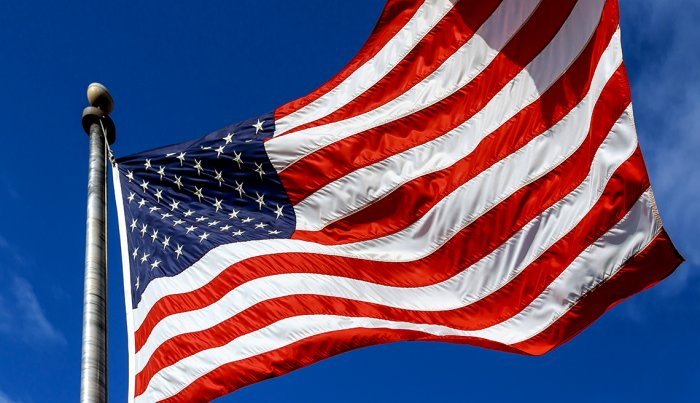
10 Myths About the American Flag
Posted on June 14th, 2022 No commentsDon’t believe everything you’ve heard about the Stars and Stripes
by Aaron Kassraie, AARP, Updated May 18, 2022 (excerpt)
Myth #1: Betsy Ross created the first American flag
The familiar story of George Washington walking into a shop and asking Betsy Ross to sew a flag originated with William Canby, a grandson of Ross, said Peter Ansoff, president of the North American Vexillological Association, a group devoted to the study of flags. Canby presented his tale with little supporting evidence to the Pennsylvania Historical Society in 1870, nearly a century after the original flag was created. He claimed Ross told him the story right before her death in 1836, when he would have been around 11 years old.
“Obviously, he was still a youngster at the time, and he was writing this much later than that,” Ansoff said. “There are many discrepancies in the story — some things that just don’t make sense.”
Since Washington was out in the field commanding the army, for example, he didn’t spend much time in Philadelphia, where Ross’ upholstery shop was located. Additionally, flags were first made not for ground troops but for naval forces, which Washington had little to do with, Ansoff said. The true creator of the first American flag is likely lost to history.
What is the Flag Code?
The Flag Code is a set of flag etiquette guidelines developed in 1923 by the American Legion and other organizations. It instructs when the flag should be displayed, manners and methods of displaying it, and buildings where it should be raised. There are detailed specifications for displaying the flag at half-staff and even how to deliver the Pledge of Allegiance.
The Flag Code was adopted as law by Congress in 1942. However, it does not have an enforcement mechanism, and there is no flag police. States have attempted to punish people who disrespect the flag. However, their efforts were struck down by the Supreme Court as free speech violations.
Sources: The American Legion and the Congressional Research Service
Myth #2: The flag has always had stars and stripes
America’s earliest flags did not have stars and stripes. A flag used in 1775, for example, did have stripes, but it displayed the British Union Jack crosses in the canton, the top left corner of the flag that’s also known as the union. The primary use of a national flag at that time was for naval ships to be able to recognize each other.
Congress didn’t adopt the flag with 13 stars and 13 stripes as the official U.S. flag until 1777.
Myth #3: Americans have always flown the flag
Prior to the Civil War, flags were really only flown in an official capacity on ships, forts and government buildings. “In the antebellum period, if a citizen had flown his flag on his house or carriage, people would have thought that was strange. Why is he doing that? He’s not the government,” Ansoff said.
The outbreak of war in 1861 quickly changed Americans’ attitudes about displaying the flag.
“At the beginning of the Civil War there was an outburst of patriotism,” Ansoff said, “and very soon, you saw people flying flags everywhere to show their support for the Union cause.”
Myth #4: Red, white and blue have official meanings
The colors of the flag were not assigned any official meaning when the first flag was adopted in 1777. The traditional meanings assigned to the colors may have arisen five years later, in 1782, when Charles Thompson, the secretary of the Continental Congress, waxed poetic about the colors in the Great Seal of the United States, which he helped design. Thompson described the red in the seal as representing hardiness and valor; the white, purity and innocence; and the blue, vigilance, perseverance and justice.
As for the origin of the red-white-and-blue color scheme, it’s likely no coincidence that the British flag bore the same three colors.
-
NYT – Group Project
Posted on June 6th, 2022 No commentsDear Omega D5:
Everyone screws up. When I joined the Council, I recommended contacting a race of sentient, spacefaring locusts. Believe me, it took centuries to clean up that mess. I still can’t sleep without an electrified mosquito net.
But bringing back those humans? A little more than a screwup. Introducing them to our lives has been nothing short of apocalyptic. An apocalypse it was your specific job to prevent.
I know that fact-checking isn’t as fun as First Contact. But it would have helped to know if a species was dim enough to fight two world wars. With that kind of planet, we should have taken a wait-and-see attitude. Or vaporized them from orbit.
Now we don’t have either option. There are humans in every space station, starting new religions and coughing on endangered sentients. Last week, one of them landed on a Council territory and declared it “New Texas.” We vivisected him quickly, but there are certain to be more on the way.
I encourage you to adopt a more fastidious attitude. Get into details. When you find a new species, ask: Did they take fascism seriously? How many genocides per decade do they commit? Are their leaders the loudest, most sociopathic members of their hives? Did they invent nukes before nonstick pans? The galaxy will be better for it.
Sincerely, Alpha 70-1 ♦
-
Sustainable Seafood Guide
Posted on May 22nd, 2022 No comments
This guide aims to provide a high-level overview of the seafood landscape in order to empower folks in making seafood purchasing decisions. It’s important to note that ethical consumerism alone won’t save our fishing communities nor the ocean. This guide hopes to raise awareness and encourage everyone to work toward changing public policy and getting more connected to your local seafood providers.
This guide also acknowledges that the current system is rife with inequities that prevent many people from having access to a range of healthy foods. In addition, the commodification of marine animals for the global seafood trade has pushed seafood off the plates of many peoples — especially indigenous peoples — who have historically relied on seafood for sustenance and subsistence purposes.
Still, millions of people eat commercially produced seafood and use labels and certifications to help them make their purchasing decisions. When seafood eaters base their seafood purchases solely on the label, they delegate their individual responsibility for making good purchasing decisions to the corporations trying to sell their fish. Having a few simple rules of thumb can guide sustainable seafood choices and prevent one from
-
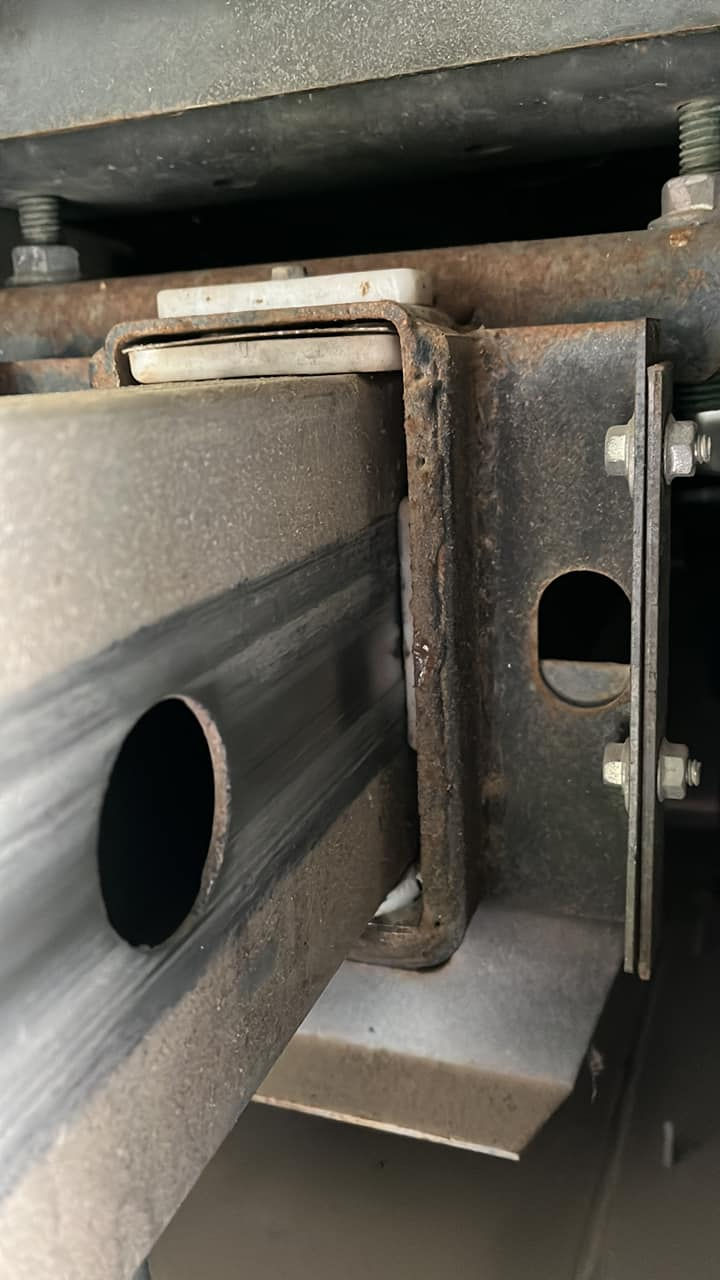
Winnebago Journey DL Main Slide Repair
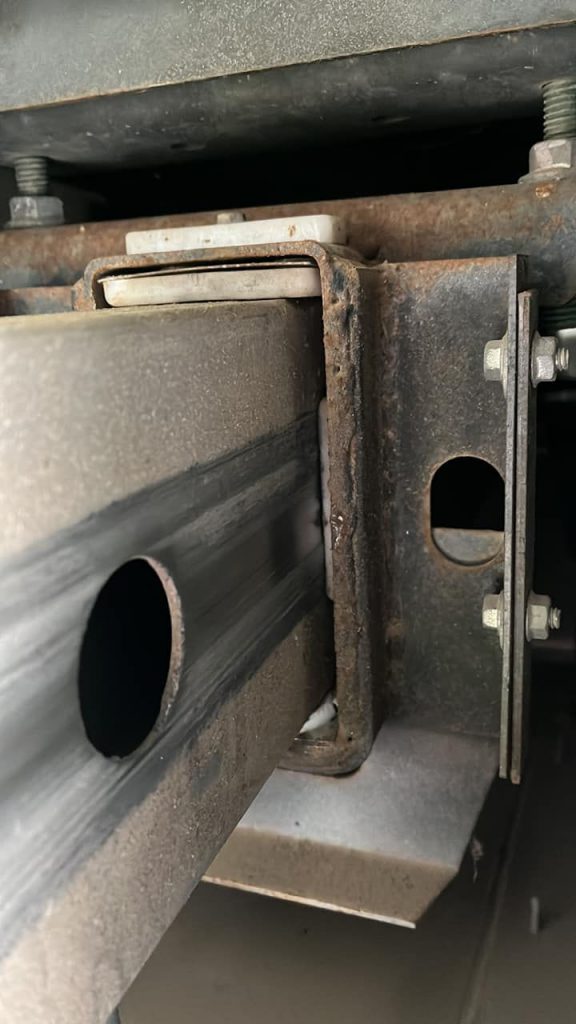
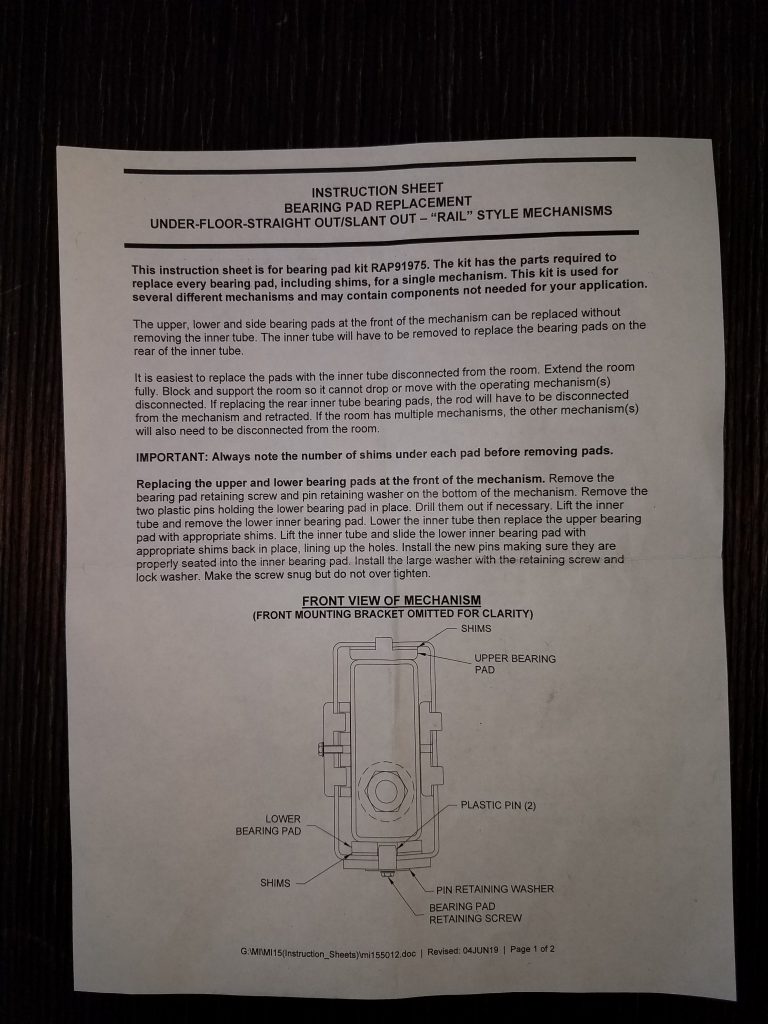
Posted on May 13th, 2022 No commentsThis will be a living document up and to the point that I have completed the full install, front & rear, of the slide pad kit assemblies. I bought two kits, one for each slide. We have not done the install yet but based on the instructions it appears as if the slide needs to be separated from the inner (smaller) rectangular tube completely. This will require disconnecting the hydraulic cylinder from both tube assemblies and disconnecting the other end from the slide shell. We intend to use 4 floor jacks to support the slide shell while the tube is fully disconnected.
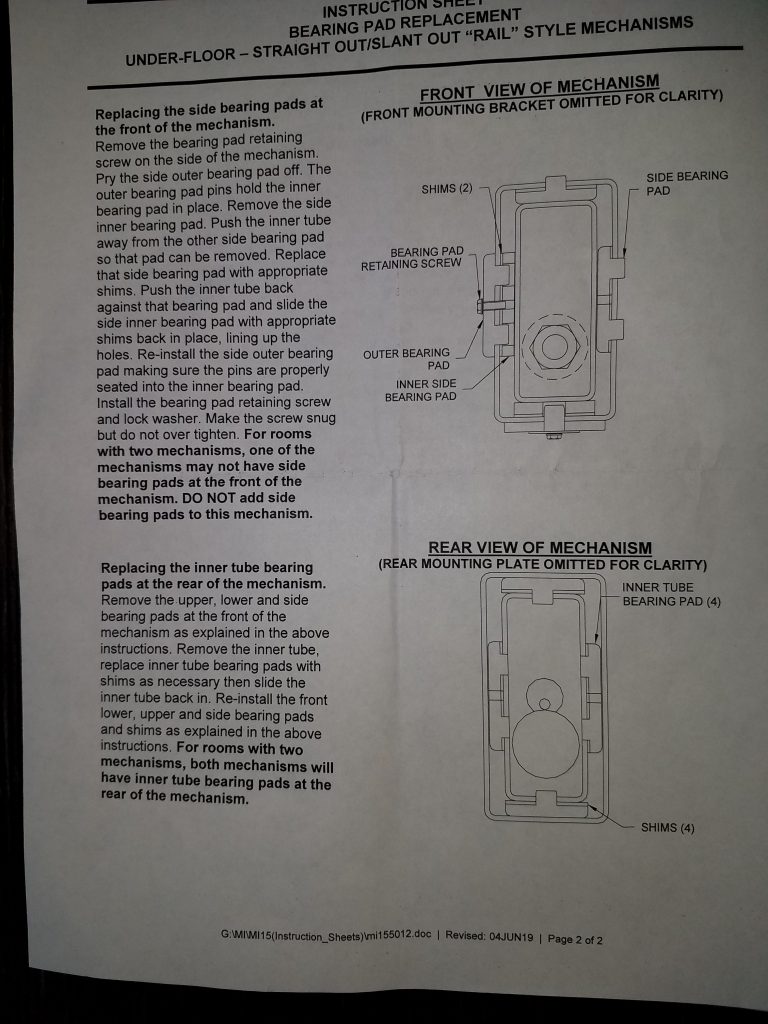
When the slide tubes are disconnected fore & aft the inner rectangular tube can freely move, first to replace the aft slide pads and second to replace the forward slide pads. After this is done, the forward end of the inner tube will be connected back to the slide shell and then the aft end will be reconnected to the hydraulic ram.
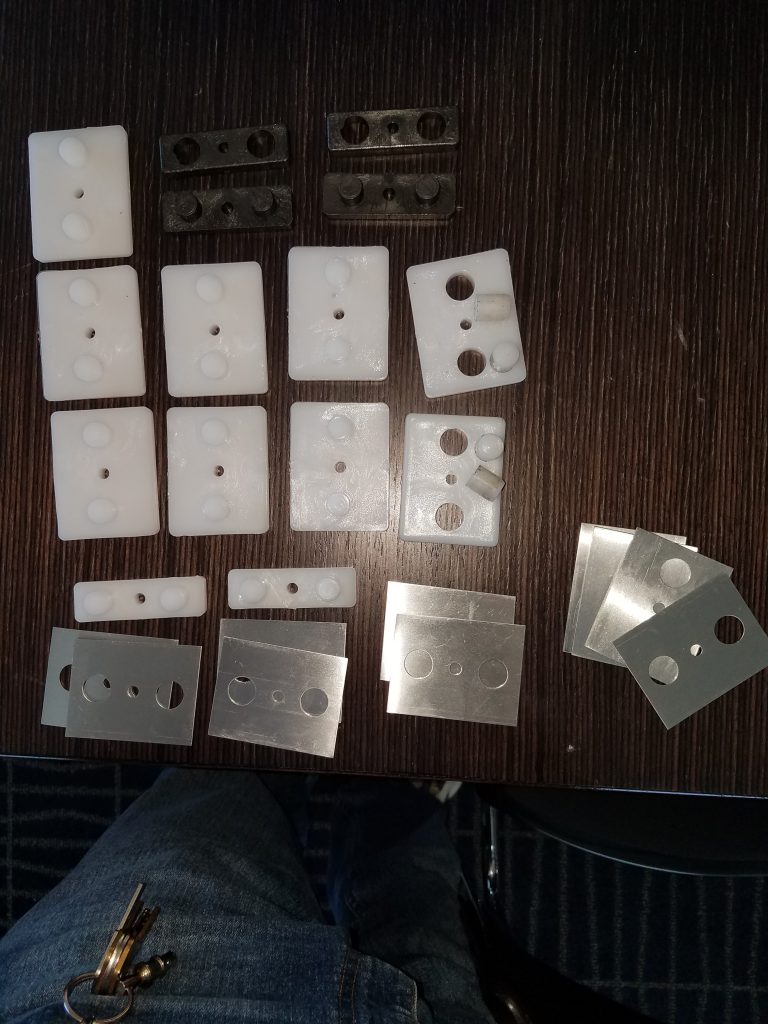
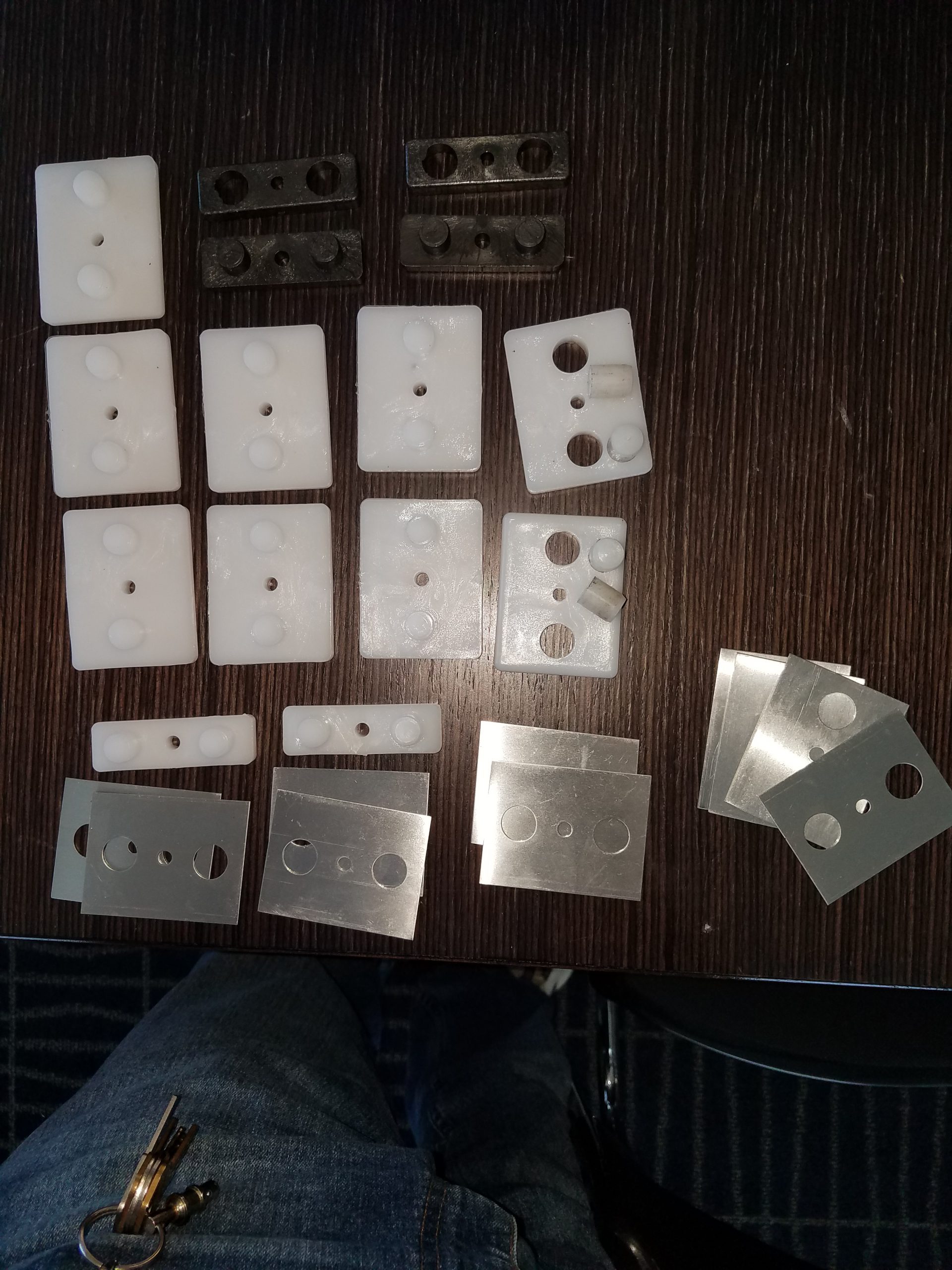
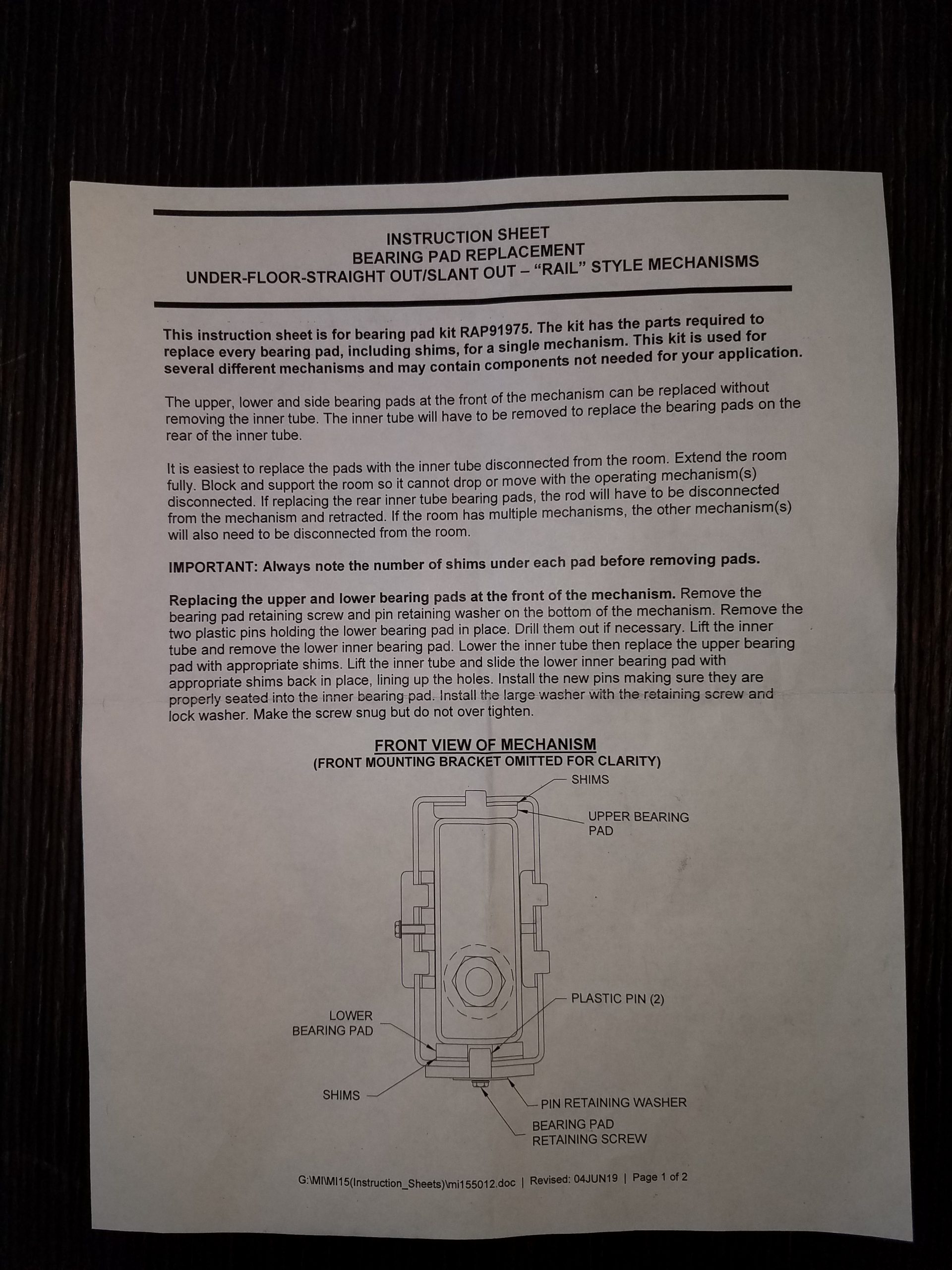
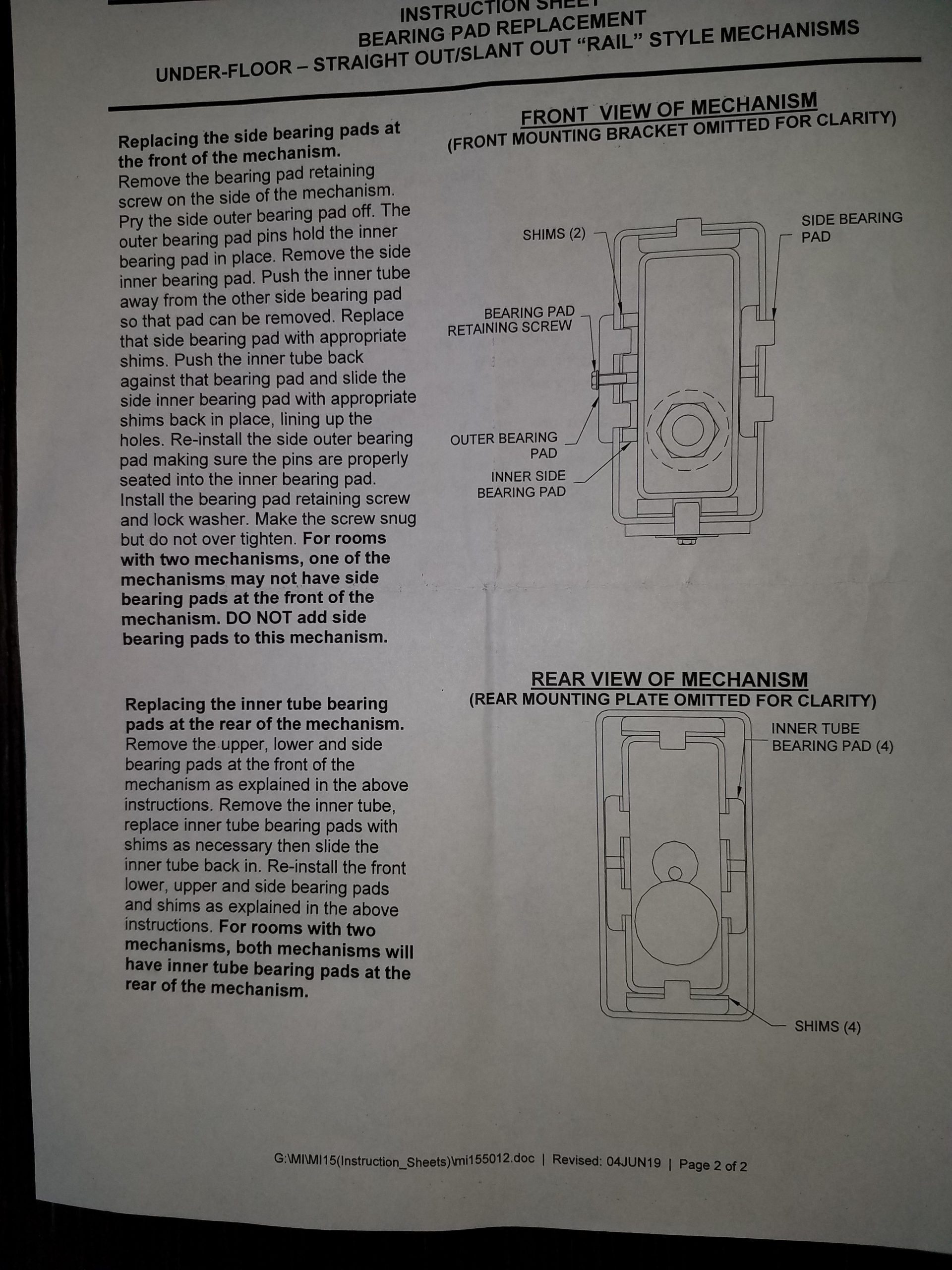
I will explain in more detail as we go through the actual sequential event steps. We think it essential to have all the tools necessary to do this job completely on hand ready for easy deployment. Below are attached the the Kit hardware components and the instructions for performing the operation.